
December 2013 - CandleLighters.ca
Effective Weight Loss with Juicing
 More people are discovering weight loss with juicing, and a lot of people accredit it to their getting in shape. Juicing is indeed not just a tasty way of getting all the nutrients you need – many people are also reporting that it is a great way of losing weight effectively and without too much hassle.
The great thing about juicing diets is that they’re easy. The basic recipes are simple and easy to remember, and it doesn’t take much time from your day to day life. Weight loss with juicing is also cheap in the long run, as compared to many other diets out there, you basically just need to get the fruits and vegetables that you’re actually supposed to eat any way – in bigger quantities and liquid form via juicing. Don’t go too crazy buying your first juicer, Bella gets good reviews and is doing a good job for me so far, costing under 50 bucks. I know it is not going to be the last juicing machine I ever purchase but I decided against tying a lot of money up in my first one, while establishing whether I’d stick with it. If you are ready for making the step up, prepare to be blown away by the amount of choice out there! I have been checking this site here for juicer reviews Juicers & Recipes. Their recipe section is decent as well – its not enough to just have a juicer, you need to feed it as well…
A How to Guide to Weight Loss with Juicing
There are basically two models of losing weight with juicing – the radical, in which you turn entirely to juicing over periods, skipping regular foods, or the moderate, where you use juicing as a means of decreasing your appetite. If you want to keep the weight off over longer periods, I recommend you to stick to the moderate type, and I discuss my reasoning for that below. Losing weight with juicing is really quite simple – once you have a juicer and the ingredients (great recipes can be found all over the Internet!) you just wait until about twenty minutes before your regular meal, and make yourself a large glass of juice. You then proceed your day as usual, getting dinner twenty minutes later. This glass helps you to ease your hunger, and will also ensure that you always get the minerals and vitamins needed. It is important not to wait until just before dinner to drink your juice, as your body needs time to process the juice and start to feel full.
A Weight Loss Diet without Starving
A common misconception concerning weight loss with juicing is that you have to go hardcore and replace your meals entirely with juices – while some do this indeed, most actually do not, and you don’t really have to go so far just in order to lose weight. As with all diets, you shouldn’t really starve yourself and walk around feeling all miserable – when you do this, you usually give up after just a short while and return to your usual eating habits. It is much better to change up your lifestyle in a way that’s doable by gradually lowering your calorie intake. This way, your body slowly adapts, and while the change might not be as dramatic as when you suddenly starve, change will come nonetheless. Part of it is of course also that a larger body requires more food because, well, it’s larger! As you lose fat, you gradually need fewer calories to function, and so a smaller appetite will come without much of a struggle. It is of course always important to check with your physician before starting any diet, and that is of even greater importance if you plan on losing a lot of weight quickly – juicing truly is a healthy alternative to over eating, but make sure you don’t accidentally hurt yourself in the process.
Plastic Food Container Toxicity
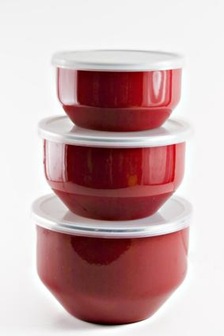 In recent years, there was much debate concerning the prolonged use of plastic food containers, including drinking bottles, in regards of the possibility that it could cause diseases due to the chemicals involved in it’s manufacturing procedures. This debate has been going on for quite a number of years now, and still has not found any conclusive clinical statistic that will prove otherwise. So, the question that is still stirring the thoughts of many of us is, do plastic food containers really have a detrimental effect on our body’s general health and if so, what could cause it?
In the early years of the development of plastics for use in food containers, one of the key points of interest with environmental concerns was the method of it’s production. It was a question of whether Chlorofluorocarbons (CFC) was produced during the manufacturing process and if it was contributing to the worsening state of the environment, particularly the ozone layer. Ken Dart of Dart Container Corporation (to learn more, click here), has debunked the speculative concerns regarding the manufacturing process of plastic food containers, saying that their company has been in the manufacturing business of plastic food containers since the 1960′s.
Ken Dart has also added that their company follows strict environmental guidelines that is regulated by the U.S. Government in regards to safe manufacturing procedures that adhere to the strictest level of compliance. Polystyrene food container products do not produce Chlorofluorocarbons (CFC) that can harm the ozone layer as the manufacturing process of these items only require the use of CO2 (carbon dioxide gas) to “blow” mold the polystyrene products in to shape. 90% of all polystyrene food container products utilize the same method of manufacturing and release just a very minimum amount of CO2 gas, which in turn is re-captured in the post manufacturing process.
Another subject of debate is whether or not these finished plastic food container products can cause chemical toxicity that in return, cause a chemical reaction that can damage the human organs. There was a study made by researchers involving the reaction of citrus based food products on plastic food containers involving a substance that was usually found naturally in lemons, grapefruits, oranges and limes called d-limonene. D-limonene is a natural substance found in these fruits an naturally occur in nature, therefore it is organic. It was observed that a polystyrene paper cup that was exposed to d-limonene, had a physical reaction that resulted in the corrosion of it’s linings.
This has been a debate that has been going on for more than 20 years. This physical reaction was due to the fact that d-limonene has a tendency to interact with polystyrene, corroding the cellular structure of the paper cup. With prolonged exposure to d-limonene, it is very likely that d-limonene can burn through polystyrene. The FDA (Food and Drugs Administration), has asserted the findings and has evaluated the clinical test results involving d-limonene reaction with polystyrene. Though it was a debated argument, it produced however, no conclusive evidence in regards to chemical toxicity related to d-limonene and polystyrene reactions.
The natural reaction of d-limonene in relation to polystyrene food container products was a physical aspect and was not of any adverse chemical reaction that could cause any relevant damage to human tissues despite of prolonged use. Thus it is safe to say that polystyrene based plastic food containers are fit in regards to it’s use for food handling.
Spider Veins: Side Effect of Cancer?
 One question that many people have been asking in regards to spider veins is if it has any type of relationship with cancer. For example, many people have been asking if spider veins were an indicator of a specific type of cancer or if it is a side effect of cancer. Fortunately, spider veins have no relationship to cancer thanks to a recent study done by Dr. Sarah Cruz of University Puerto Rico Medicine School of San Juan. Cruz studied 298 people, 135 with cancer and 163 without cancer, and she saw no relationship in the four year study.
So what does cause varicose veins a.k.a spider veins? There are numbers reasons as to how we believe spider veins are caused which are obesity, medical history, hormonal changes, pregnancy, increasing age, and lack of movement.
According to a Soffer Health, a vein doctor Miami company, obesity is the number one cause to spider veins, which is due to putting extra weight on the veins.
If you have a medical history where you were born with weak veins or families with a history of any kind of vein problem will be at risk to received varicose veins.
Hormonal changes can cause spider veins due to the increase of hormones through birth control, menopause, pregnancy, or even puberty.
Pregnancy can also cause spider veins by the large increase of blood in the body, which can cause veins to enlarge. Additionally, a growing uterus also puts strain on your veins.
According to Piano Vein Vascular, a spider vein treatment Chicago center, the next most common cause of spider veins is old age. As people get older, our veins weaken which causes them to not work as well forming buildups in certain areas.
If you’re sitting or standing in the same position for long periods of time every day (for example when you’re at work) you can put excess pressure on a single area repeatedly forming spider veins slowly over time.
There are a few more reasons as to why spider veins are caused, but these are the most common. The most common area for them to appear on the body is on the legs. This is because of the pressure of body weight and the force of gravity. Because the legs are at the bottom of the body, they have the toughest job of pushing back the blood of the entire rest of the body and it’s doing this process every second of your life.
Thankfully, spider veins normally don’t mean you’re at risk of any major health concerns. People who want to get their spider veins removed can do so through laser treatment that has proved to be a fairly safe procedure. However, there are still some cases where varicose veins can be a sign of an impeding health problem so we recommend to keep a check on it.
Some major health concerns can be ulcers or sores and susceptibility to injury that can cause significant blood loss. to ensure these don’t happen to you, keep a close look on your spider veins and take not of any throbbing. Even if you do get the laser treatment, you are still at risk to these health problems so continue to monitor them.
Getting Rid of Foot Pain with Better Shoes
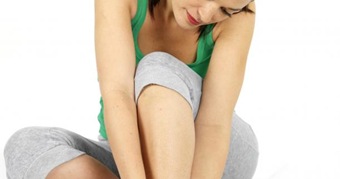 Ever since I Was ten years old, my feet started to hurt significantly at the end of the day that had a lot of walking in it. The bottoms of my feet would send sharp pain up my leg with every step and I would have to rest often, take off my shoe, and massage my foot. This was not normal for someone so young (or anyone at all) and I wanted to see what I could do to get this problem fixed. I ended up doing some testing, and I discovered that I had flat feet or feet with lower than normal arches and I was overpronating. Let me explain what this all means.
Overpronators are people who’s feet roll inward after the heel strike more excessively than normal. It’s a little difficult to tell if you’re an overpronator, but you can find out if you are one by looking at the bottom of an old pair of shoes and seeing if the outsides of them are significantly worn down more than the inner part of the shoe. That’s a good indicator of an overpronator. To see if you have flat feet, you can get get the bottom of your foot wet while bare feet and step on a light sidewalk (a surface you can see your wet footprint on) and analyze your foot print. If the middle of your foot, where the arch is, doesn’t seem to contract at all then you have flat feet.
So what’s the cure or remedy for flat feet? Although surgery is available, it’s definitely not needed or recommended. The best thing to do is to get the right kind of shoes to support your foot type. I found an awesome list online of the best walking shoes where the site’s author handpicks various shoe models that he handpicked as the best shoes for walking. The author understands that different people have different kinds of feet: wide, narrow, flat feet, and high arch. If you have flat feet, you need to go to his page for the best shoes for flat feet and you will surely find the best walking shoes for you.
If you measured your foot correctly and select the right shoe for you, then you will be amazed at the night and day difference a good pair of walking shoes can do for your feet. Ever since I bought shoes for my flat feet, the pain has subsided and I’m building a stronger arch now and overpronatiing less than before. I have always seen shoes as just for style until I got my new pair and felt the difference first hand. Good walking shoes are like a form of medicine: they treat foot pain and give you the feeling of more energy by not making you tired as fast.
If you have any kind of foot pain or are just in the need of new shoes, do yourself an enormous favor and get yourself the perfect walking shoes. You will be thanking yourself every morning when you put them on.